
What Makes CeramicSpeed Bearings Different?
When upgrading a performance road bike, most cyclists think about lighter wheelsets, aerodynamic frames, or a better groupset. Bearings rarely get the same attention, despite playing an important role in how smoothly a bike runs.
That's where CeramicSpeed comes in. Known for precision-engineered components and low-friction technology, the Danish brand focuses on reducing mechanical resistance in competitive cycling.
However, with CeramicSpeed bearings costing considerably more than conventional steel options, what makes them different, and will you actually notice the improvement on the road?
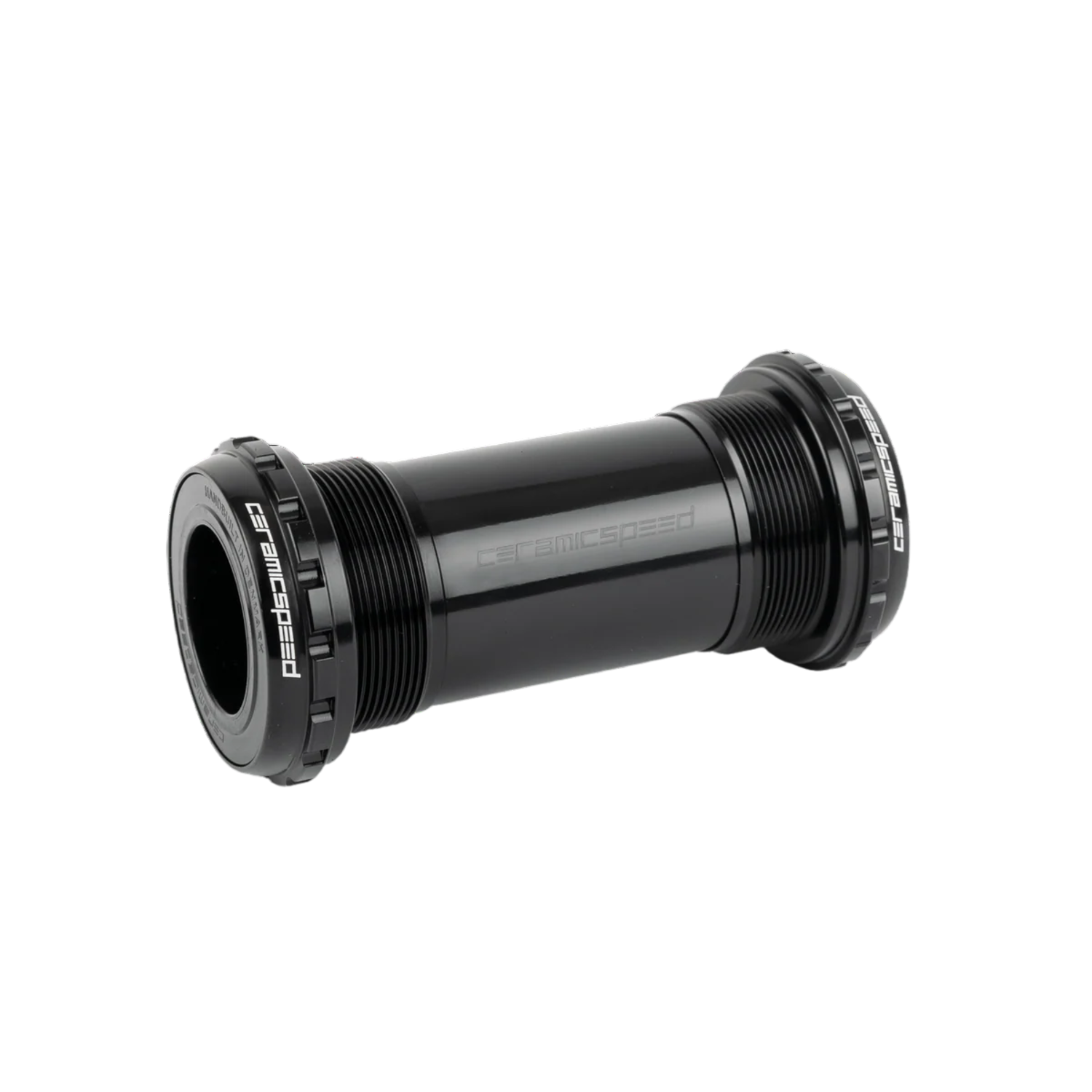
CeramicSpeed BB ALPHA high‑performance bottom bracket.
What Do Bearings Actually Do on a Bicycle?
Every time you pedal, coast, or steer, bearings allow moving parts to rotate with minimal resistance. Inside a typical bearing, small balls roll between two metal rings, known as races. This arrangement supports loads while reducing friction between moving surfaces.
You'll find bearings in several areas of your bike:
-
Bottom Bracket: Allows the crankset to rotate smoothly.
-
Wheel Hubs: Support wheel rotation while carrying the rider's weight.
-
Headset: Allows the fork and handlebars to turn smoothly.
-
Derailleur Pulley Wheels: Guide the chain through the rear derailleur.
Worn or contaminated bearings can develop roughness, resistance, or unwanted play. Over time, these issues can affect drivetrain efficiency and accelerate component wear.
Ceramic vs Steel Bearings: What's the Difference?
Traditional bicycle bearings generally use steel balls running inside steel races. They're durable, affordable, and perform well when properly maintained.
Ceramic bearings use harder, lighter ceramic balls. Most high-performance cycling applications, including CeramicSpeed's conventional range, use a hybrid ceramic construction, combining silicon nitride ceramic balls with steel races.
|
Feature |
Steel Bearings |
Hybrid Ceramic Bearings |
|
Ball Material |
Steel |
Silicon nitride ceramic |
|
Hardness |
Generally softer |
Harder and more wear-resistant |
|
Weight |
Heavier balls |
Lighter balls |
|
Friction |
Low when properly lubricated |
Potentially lower with optimised construction |
|
Corrosion Resistance |
Requires protection |
Ceramic balls resist corrosion; steel races still need protection |
|
Cost |
More affordable |
Higher manufacturing costs |
One important distinction: ceramic doesn't automatically mean faster. Bearing friction depends on race quality, lubrication, seals, load, and installation. A well-made steel bearing can outperform a poorly manufactured ceramic alternative.
This is why CeramicSpeed focuses on precision rather than simply replacing steel balls with ceramic ones.
What Makes CeramicSpeed Bearings Different?
CeramicSpeed approaches bearing performance as a complete system. The ceramic balls, races, lubrication, and seals all contribute to efficiency.
1. Grade 3 Ceramic Balls for Greater Precision
CeramicSpeed uses Grade 3 silicon nitride (Si3N4) ceramic balls, manufactured to extremely tight tolerances for roundness and surface finish. According to CeramicSpeed, these balls are 400% smoother, 128% harder, and 58% lighter than conventional steel balls.
Their smooth surfaces help minimise microscopic irregularities where the balls contact the races, potentially reducing friction and wear. However, the weight difference refers to the balls themselves, not the entire bearing assembly.
2. Optimised Races, Lubrication, and Seals
Even precisely manufactured ceramic balls won't perform efficiently against poorly finished races. CeramicSpeed pairs its ceramic balls with hardened steel races featuring polished grooves. Specially formulated grease balances lubrication, friction, and service life.
Seals also matter. They must keep moisture and dirt out without creating unnecessary drag, particularly for Malaysian cyclists frequently riding in humid conditions and wet weather.
3. Durability and Quality Control
Ceramic balls are highly resistant to wear and corrosion. CeramicSpeed also offers coated bearing options with treated steel races for improved hardness, wear resistance, and corrosion protection.
The brand's standard bearings are hand-built in Denmark, with components carefully matched during assembly and subjected to multiple quality checks. However, premium bearings aren't maintenance-free. Cleaning, inspection, and proper lubrication remain important, especially after repeated wet-weather rides.
Where Do the Cycling Performance Gains Come From?
Not every watt your legs produce reaches the rear wheel. Some energy is lost through friction in the chain, drivetrain, and rotating components. Bearings account for a small portion of these losses. By reducing internal friction, CeramicSpeed aims to minimise wasted energy, leaving slightly more power available to propel the bike forward.
Low-friction bearings can produce measurable efficiency gains under controlled testing. However, actual watt savings depend on bearing location, load, speed, lubrication, and the components being compared.
It's also worth remembering that a bearing spinning freely by hand doesn't necessarily perform better under real riding loads. Proper efficiency testing matters more than how long a wheel or pulley continues spinning.
Are CeramicSpeed Bearings Worth the Money?
Whether CeramicSpeed is worth the investment depends largely on your riding priorities.
For Competitive Cyclists
If you're racing regularly or optimising a high-end road bike, CeramicSpeed can complement an already efficient setup.
However, bike fit, suitable tyres, and a clean, properly lubricated drivetrain should generally take priority before investing in premium bearings.
For Performance Enthusiasts
If you've already invested in a quality groupset and wheelset, upgraded bearings may be a natural next step. The appeal isn't necessarily a dramatic speed increase, but precision engineering, smooth operation, and consistent component performance.
Performance-focused cyclists can consider upgrades such as the CeramicSpeed BB Alpha, which combines Grade 3 ceramic bearings with precision-engineered races and seals to reduce friction.
For Recreational Riders
Quality steel bearings often provide better value for weekend rides, commuting, and occasional long-distance cycling.
If your existing bearings are running smoothly, upgrading solely for performance may offer limited noticeable benefits.
Before upgrading, check compatibility. Bottom bracket standards such as BSA, BB86, PF30, and T47 have different fitting requirements. Crank spindle dimensions also vary, making correct component selection essential.
Conclusion
CeramicSpeed distinguishes itself through precision manufacturing, premium ceramic materials, and carefully optimised bearing construction. These features can reduce friction and improve mechanical efficiency, but they're not a shortcut to significantly faster riding.
For competitive cyclists and performance enthusiasts, CeramicSpeed bearings can be a worthwhile finishing touch to an already capable bike. For everyday riders, well-maintained steel bearings remain a practical choice.
At Pedalspot, we offer a selection of CeramicSpeed cycling components, including bottom brackets, pulley systems, and bearing-related upgrades. Explore our CeramicSpeed collection online and find the right components for your bike and riding goals.